The Akar Sampah Mount Batur Alpine Conservation Campaign

Media Release and Unified Operational Summary
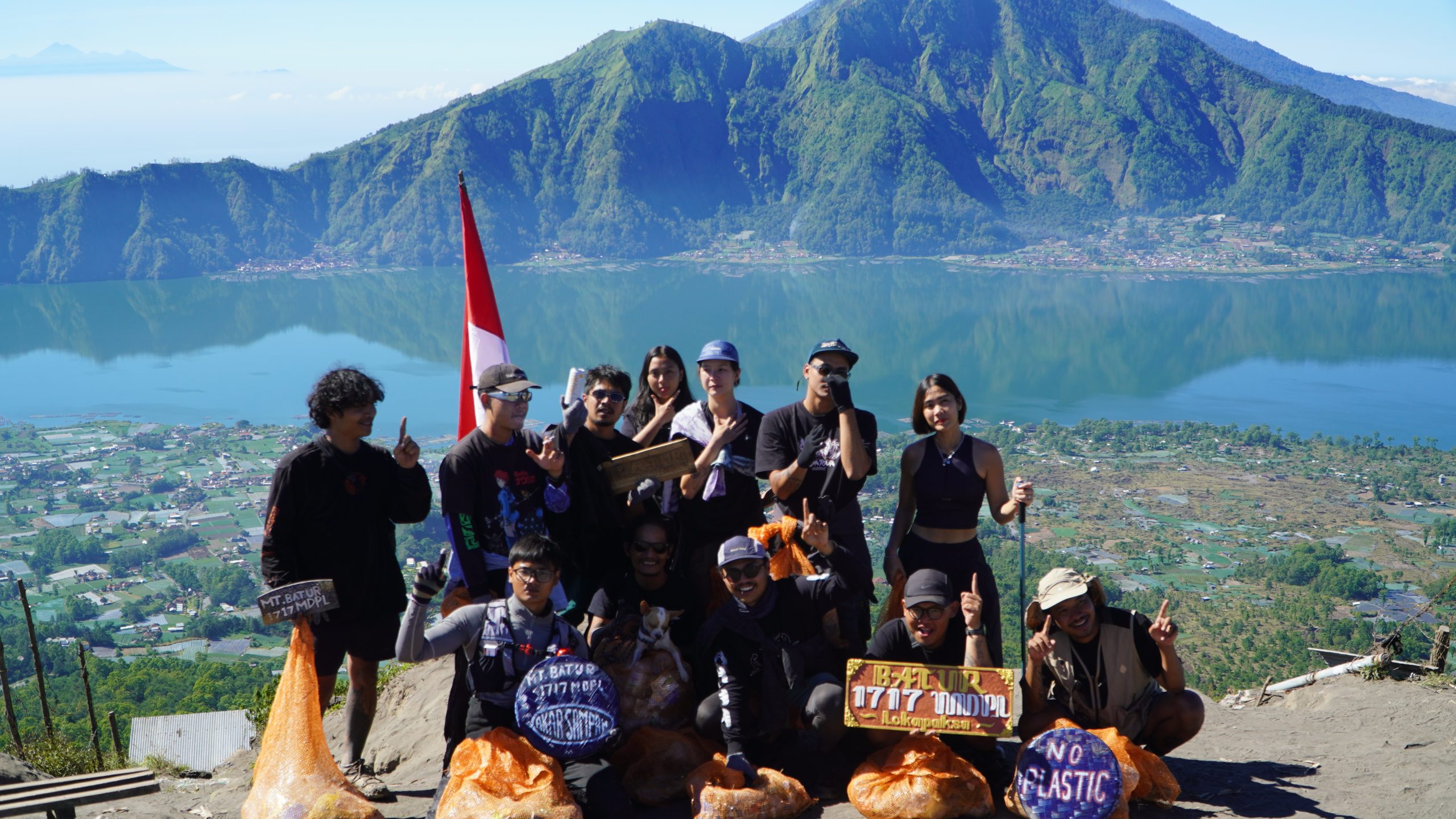
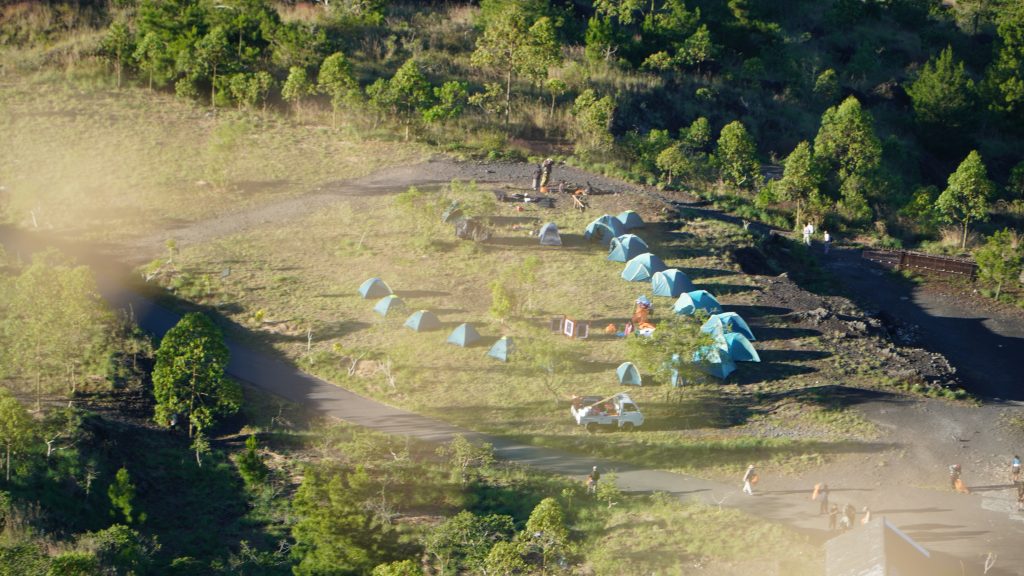
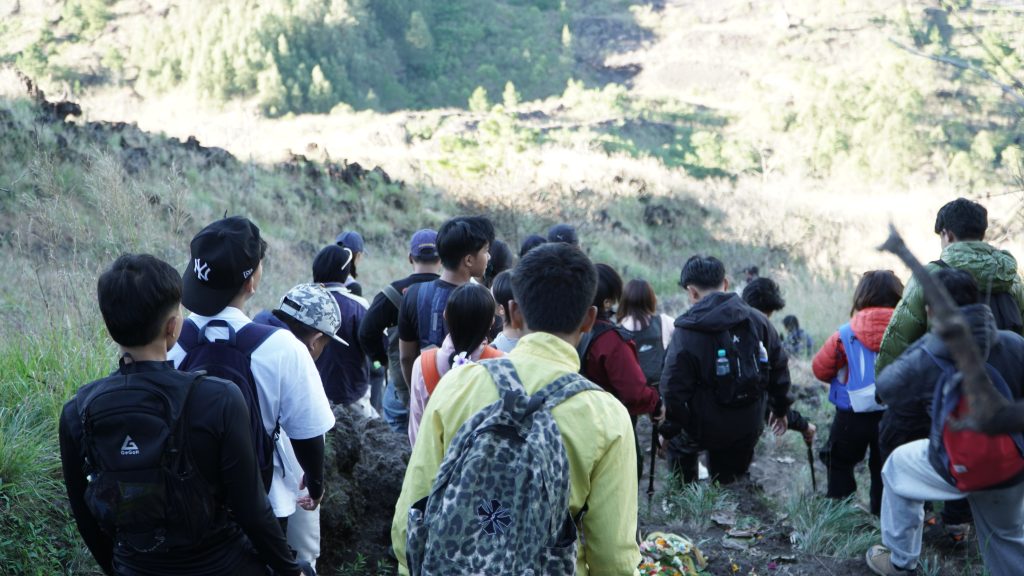
The Bali-based youth environmental organization, Akar Sampah, successfully concluded its major high-altitude ecological intervention, “Summit 1: Gunung Batur,” over the weekend of May 30–31, 2026, in the sub-alpine highlands of Kintamani.Mobilizing a dedicated force of 58 volunteers, the two-day campaign successfully removed 79.54 kilograms of inorganic waste from critical cultural and ecological locations across the slopes of Mount Batur. Supported by an extensive network of progressive corporate sponsors, local youth councils, and creative organizations, the campaign paired direct waste remediation with targeted cultural advocacy and digital media production to combat the escalating waste crisis threatening Bali’s fragile highland watersheds.As an operational milestone for the Akar Sampah Project, “Summit 1” establishes a comprehensive blueprint for community-led alpine conservation. By deploying physical extraction teams alongside cultural events, the organizers successfully transformed a municipal waste management challenge into a celebrated public civic ritual. The campaign targeted three high-vulnerability locations on Mount Batur: the open dumping grounds surrounding the sacred Pura Pasar Agung trailhead, the Kawanan Hiking Trail, and the Kanginan Hiking Trail.
Institutional Foundation of the Akar Sampah Movement
The Akar Sampah community, led entirely by youth, was established in 2018 under its founding initiative, the “Gerakan Serangan Bebas Plastik” (Plastic-Free Serangan Movement). While early efforts focused primarily on highly vulnerable coastal mangrove forests and marine environments, the group has strategically expanded its operational scope to encompass alpine systems. This strategic shift recognizes that mountains function as the vital hydrological and spiritual “source of life” (sumber kehidupan) for the entire island of Bali, meaning upstream pollution inevitably degrades downstream riverways, agricultural subak networks, and coastal ecosystems.
Akar Sampah’s environmental initiatives are designed to support and operationalize regional legislation. Specifically, the Mount Batur campaign directly aligns with the Governor of Bali Circular Letter (Surat Edaran) Number 09 of 2025 regarding the Clean Bali Trash Movement (Gerakan Bali Bersih Sampah) and the landmark Governor of Bali Regulation (Peraturan Gubernur) Number 97 of 2018 concerning the Limitation of Single-Use Plastic Waste Generation. By tackling high-altitude litter, the organization translates regional environmental policy into tangible local action.
Geographic Distribution of Alpine Waste and Spatial Implications
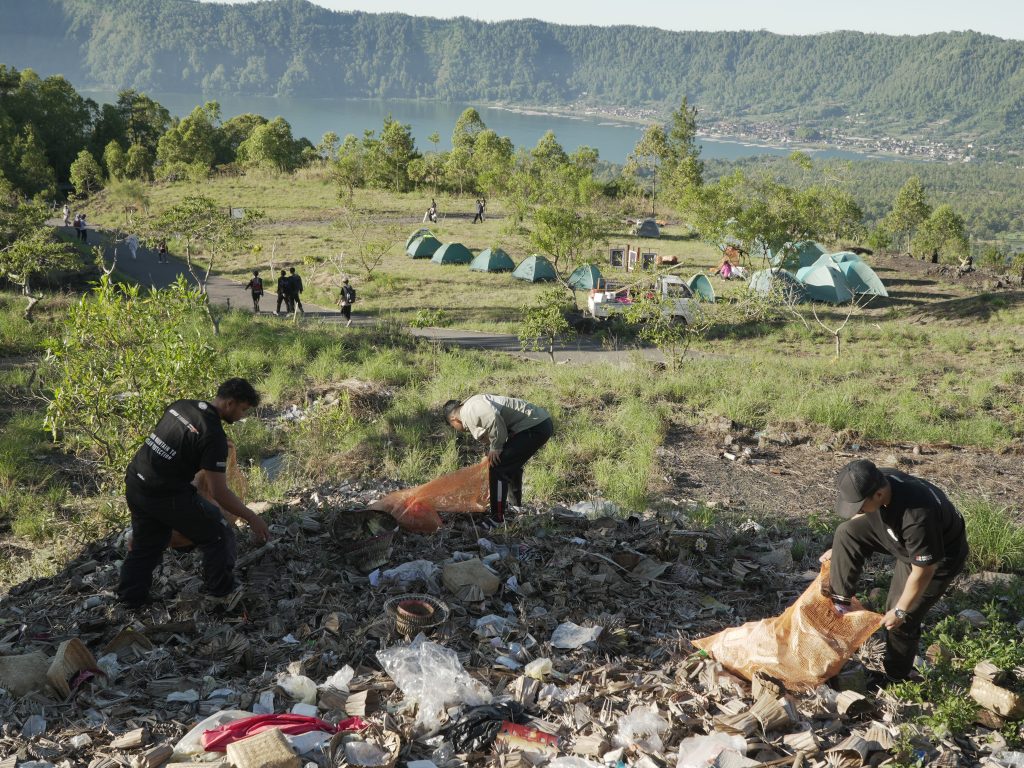
The physical waste remediation on Day 2 of the campaign was executed across three distinct target zones, yielding variations in both waste concentration and volunteer productivity
Operational Waste Remediation Metrics
| Target Destination Zone | Ecological/Infrastructure Classification | Assigned Volunteer Force | Volumetric Waste Extracted (kg) | Yield per Capita (kg/person) |
| Pura Pasar Agung Area | Sacred Heritage / Trailhead Open Dump | 8 volunteers | 53.20 kg | 6.65 kg |
| Kawanan Hiking Trail | Active Sub-Alpine Trekking Route | 9 volunteers | 11.00 kg | 1.22 kg |
| Kanginan Hiking Trail | Active Sub-Alpine Trekking Route | 15 volunteers | 15.34 kg | 1.02 kg |
| Unified Campaign Totals | Strategic Conservation Area | 58 volunteers | 79.54 kg | 1.37 kg (Average) |
An analysis of these operational metrics reveals a significant spatial disparity in waste distribution. The active trekking paths (Kawanan and Kanginan) collectively yielded 26.34 kilograms of waste, managed by 24 trail volunteers. In contrast, the static open dumping ground located near the Pura Pasar Agung temple complex yielded 53.20 kilograms—representing 66.8% of the entire campaign’s waste extraction—with a team of only 8 volunteers. This resulted in an extraordinary per-capita extraction rate of 6.65 kilograms per volunteer at the temple area.
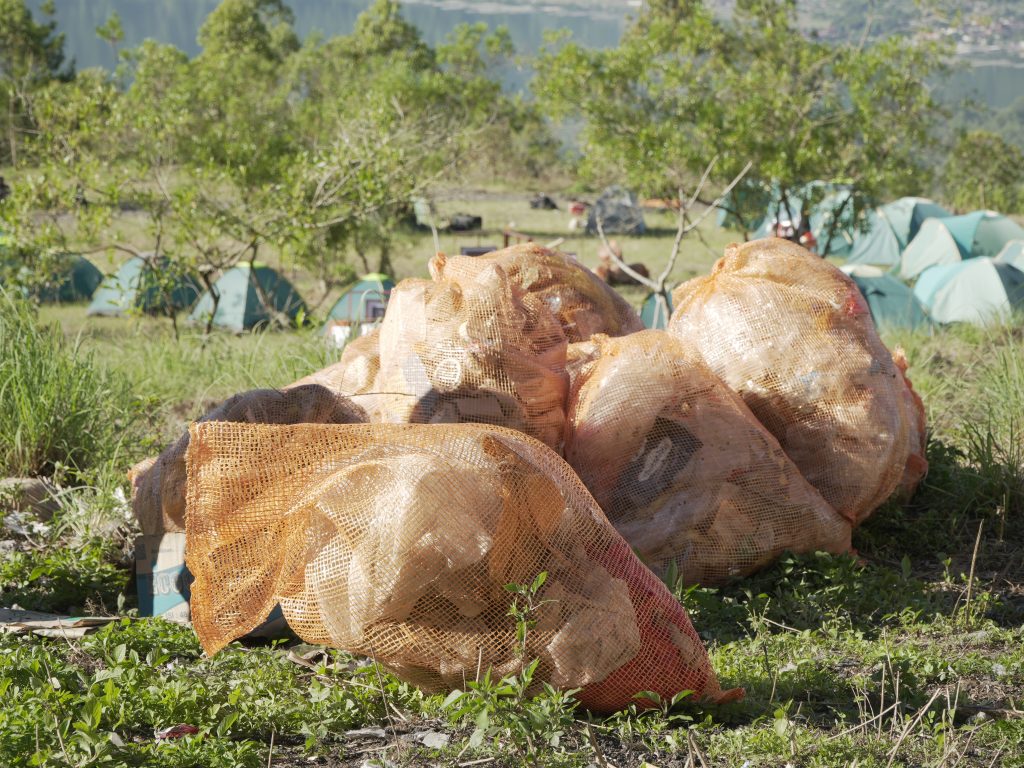
This extreme concentration highlight a critical bottleneck in mountain waste management. While transient hikers and commercial guiding groups increasingly practice conservation ethics on the active trails, static hubs like trailheads and religious centers lack adequate waste management infrastructure. Pura Pasar Agung is both a highly frequented site of worship and a primary starting point for mountain ascents, making it a natural gathering point where waste accumulates rapidly. The absence of formal municipal waste removal services forces local stakeholders to resort to open dumping and burning, which damages local air quality and poses a severe wildfire hazard to the surrounding sub-alpine forests of the Bukit Payang Nature Reserve. Furthermore, the timing of this intervention is ecologically significant. The slopes of Mount Batur had recently experienced heavy recreational use during the BCA Bali Trail Run (BTR) Ultra 2026 on May 15–17, 2026, which drew over 5,000 international runners across the sub-alpine terrain. While organizations like the ACS Bali Foundation worked to manage waste generated directly during that event, the subsequent accumulation highlighted the need for sustained, community-led post-event cleanups like the Akar Sampah campaign to protect the area’s sensitive ecosystems.
Strategic Action-Oriented Recommendations
Implementing Trailhead Waste Recovery Infrastructure
Local authorities in the Bangli Regency, in coordination with temple guardians, should replace the open dumping ground at Pura Pasar Agung with a permanent, secure waste collection station.1 This facility should feature wind-proof and wildlife-resistant sorting bins for organic and inorganic waste, supported by a regular collection schedule to prevent accumulation and deter open-air burning.5
Establishing a Waste-Tracking System for Hikers
To protect active trekking routes, local guide associations should implement a waste-tracking registry at major trailheads.18 Hikers and guides would register all potential waste items, such as plastic bottles and food packaging, before ascending, and verify that these items are brought back down upon descent. This simple accountability measure would encourage personal responsibility and help keep trails clean.3
Mitigating Wildfire Risks via Waste Management
Given the history of forest fires in the Bukit Payang Nature Area, the Natural Resources Conservation Agency (BKSDA) should collaborate with local communities to enforce a strict ban on open-air waste burning.7 Introducing clear educational signage and establishing compost systems for organic waste would provide safer, practical alternatives to burning.19
Supporting Circular Economy Projects through Sponsorships
The corporate sponsors of the Akar Sampah campaign should consider moving from event-based funding to supporting permanent, community-led waste sorting centers in Kintamani.1 Partnering with digital waste platforms like Griya Luhu would allow local communities to process inorganic waste efficiently, turning local environmental challenges into sustainable economic opportunities.
Akar Sampah Campaign
Email : [email protected]
Contact Person : +62 821 3162244 (Admin)
Website : https:/ /akarsampah.org/