
No products in the cart.
Singapore is a city built on defying its own geography. We have a cascading waterfall inside a shopping mall, an indoor cloud forest, and a world-class snow-sports facility right on Orchard Road. Yet, for a nation surrounded by water, there is one frontier we have yet to truly conquer: the perfect, consistent wave.
It’s true that Singapore isn’t entirely waveless. A passionate, tight-knit local community regularly paddles out at Longkang Point along the East Coast to catch rare, small swells when the monsoon conditions align. However, this beloved natural break is currently at risk of being lost to future coastal developments and land reclamation.
While countries like China, Japan, and the UAE have already brought the ocean inland with multi-million-dollar surf parks, Singapore’s most dedicated surfers still rely heavily on passports and planes. But with rapid advancements in wave-generating technology and a proven local appetite for board sports, building a world-class wave pool in the Lion City is no longer a pipe dream – it is a compelling, viable business opportunity.
Here is the blueprint for how Singapore can build the ultimate urban wave.
If you want to know if Singaporeans will pay to stand on a board, look no further than Orchard Road. In 2023, the surf-snow-skate complex Trifecta opened.
Takin, Trifecta’s head surf coach, notes that the complex has been a game-changer. “Surfing in Singapore is still niche compared to skateboarding and snowboarding,” he explains. “But interest has grown in recent years, especially with social media and the small but dedicated ocean surf community here.”
The venue is packed on weekends, successfully “turning casual participants into regular surfers,” according to Takin. But let’s be factually clear: Trifecta is a fantastic starting point, but it is not real surfing. Its Citywave technology is a stationary, deep-water standing wave. It is brilliant for practicing balance and rail-control, but compared to what modern technology can achieve, it is essentially the “baby pool” of the sport. There is no paddling, no reading a line-up, and no traveling down a moving face of water.
Trifecta proved the demand exists. Now, it is time to upgrade the supply.
Exhibit A: Comparing the deep-water standing wave technology currently available in Singapore against full-scale pneumatic traveling wave systems.
Beyond casual riders, Singapore boasts a deeply committed core of ocean surfers. Cheryl Tang of the Singapore Association of Surfing (SAS) notes, “We estimate there are more than 300 active surfers traveling between Singapore and Malaysia.”
However, this number belies the true potential. The SAS runs a Youth Development Squad of around ten surfers (aged 12–18), and four of these athletes proudly make up Singapore’s National Surf Team. Currently, these dedicated athletes must travel overseas three to six times a year just to train, receiving no direct government or corporate support to do so.
A local wave pool transforms this dynamic overnight. It provides a consistent, Olympic-standard training facility, stopping the talent drain and positioning Singapore as the high-performance surf capital of Southeast Asia.
To make this work in land-scarce Singapore, we need the right tech. Bryan Dickerson, Editor of WavePoolMag, points out that a Singaporean project requires a specific approach. “You might want a smaller-footprint wave pool like Endless Surf or Surf Loch,” he explains. These pneumatic systems create highly customizable, traveling waves without requiring the massive footprint of an artificial ocean.
“There are different design considerations—energy efficiency, throughput, and footprint,” Dickerson says. “But the technology has reached a point where you can produce excellent waves for all levels of surfers.”
The Price Tag: Dickerson estimates the pool hardware itself at around US $20 million (approx. SGD $27 million). Once you factor in construction, water filtration, and supporting facilities, total costs can reach US $30 million to $35 million (approx. SGD $40 million to $47 million). While substantial, this is well within the standard capital expenditure for major lifestyle and tourism infrastructure in Singapore.
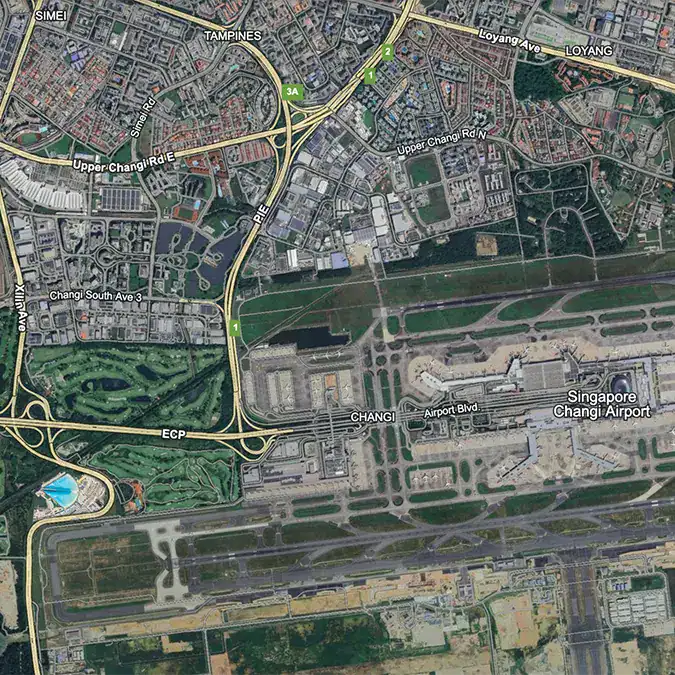
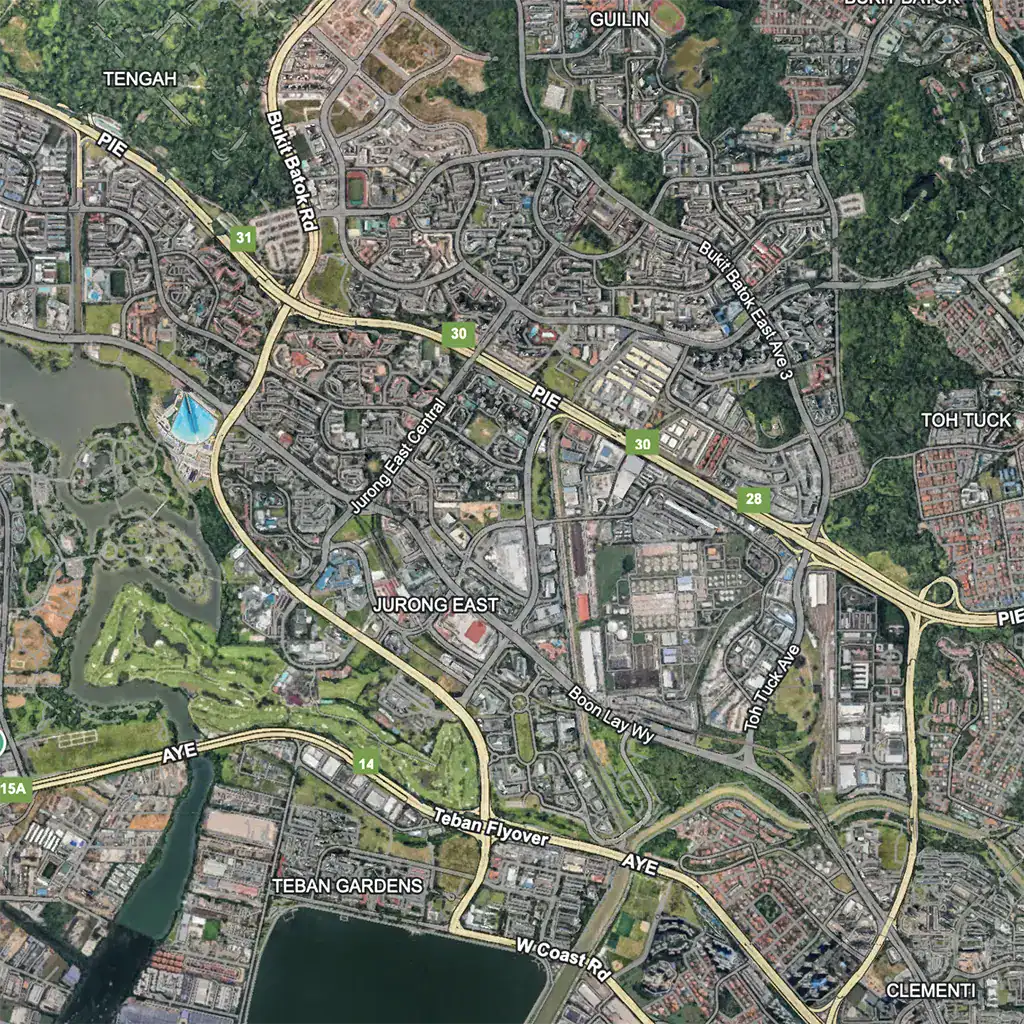
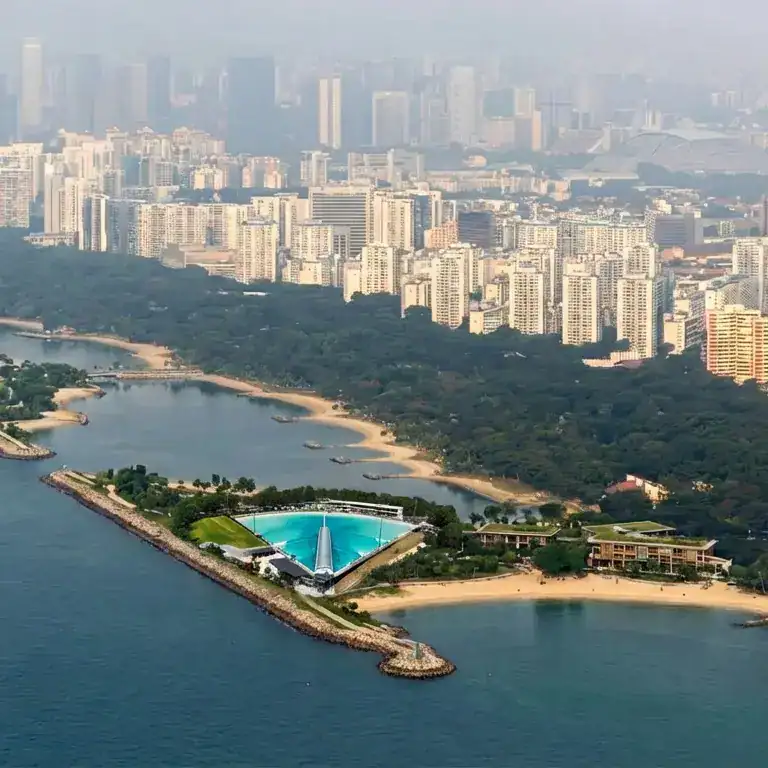
Exhibit B: Hypothetical 2 to 5-hectare wave lagoon footprints mapped against viable Singaporean land parcels.
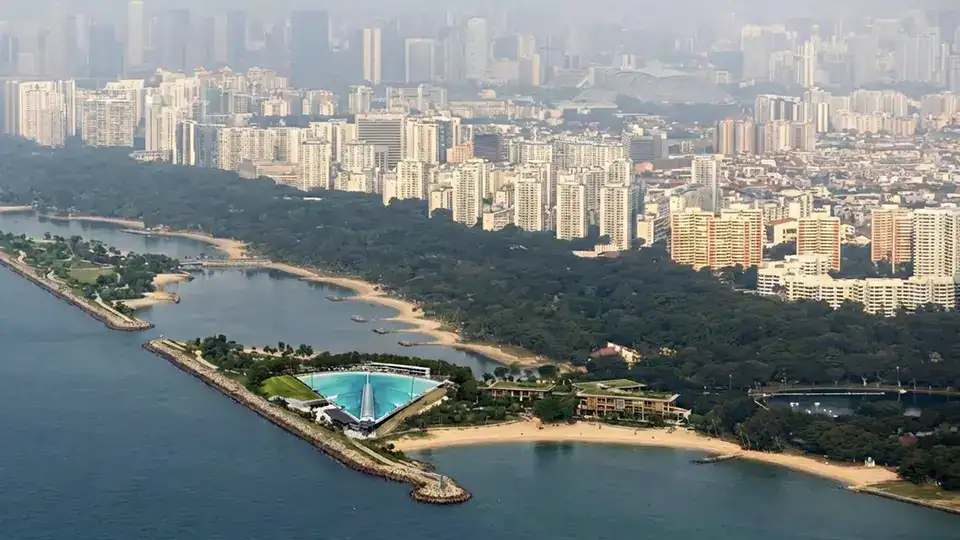
To fund an SGD $45 million facility, a syndicate model combining real estate, venture capital, and corporate sponsorship is the most viable path. Here is a hypothetical investment structure designed for the Singapore market:
| Investor Profile | Investment Target | Strategic Role | Estimated Equity / Return |
|---|---|---|---|
|
Lead Developer
(e.g., CapitaLand or CDL) |
SGD $20M |
Secures the government land lease (e.g., near Changi or East Coast) and builds the surrounding high-margin F&B, retail, and lifestyle spaces. |
45% Equity + Primary cut of commercial real estate revenue. |
|
Lifestyle/Tech VC
(e.g., Quest Ventures) |
SGD $15M |
Funds the procurement and installation of the pneumatic wave technology (Endless Surf/Surf Loch). |
35% Equity + Cut of direct ticketing/surf session revenue. |
|
Title Sponsor
(e.g., DBS or Singtel) |
SGD $5M |
Secures exclusive naming rights (e.g., “The DBS Surf Cove”), brand integration, and corporate hospitality packages. |
10% Equity + Massive marketing visibility. |
|
Local Surf Consortium / Founders |
SGD $5M |
Manages daily operations, The Surf Academy, WSL event organizing, and community outreach. |
10% Equity + Operational management fees. |
The secret to a profitable wave pool is realizing that the water is just the anchor. “A lot of projects are built around food and beverage, and event accommodations and/or real estate,” Dickerson explains. “In some cases, the pool acts almost like a loss leader.”
However, in a premium market like Singapore, both the wave and the surrounding ecosystem can generate massive, high-margin returns. Based on global benchmarks from successful parks in Australia and Europe, adapted for Singapore, here is a conservative look at the economics:
With modern pneumatic tech, the pool can host roughly 60–80 surfers per hour across beginner, intermediate, and advanced zones. At an estimated premium ticket price of SGD $100–$140 per 1-hour session, operating 12 hours a day at 70% capacity yields approximately SGD $20M–$24M annually in pure surf ticketing.
Surfers bring spectators, and spectators spend money. High-end beach clubs, surf-themed restaurants, equipment rentals, retail stores, and corporate event bookings often outpace the surf revenue itself. We estimate F&B, retail, and events will generate an additional SGD $18M–$22M annually.
Water filtration, energy consumption (pneumatic systems are efficient but still draw power), staffing (lifeguards, coaches, hospitality), land lease, and maintenance will cost an estimated SGD $8M–$12M annually.
With gross annual revenues projected around SGD $40M and operating expenses around SGD $10M–$12M, the facility stands to generate a highly attractive Net Operating Income (NOI). Even factoring in taxes, debt servicing, and depreciation, investors could realistically look at fully recouping the initial SGD $45M capital expenditure within a 4 to 6-year payback period—an incredibly strong ROI for a major infrastructure and lifestyle development.
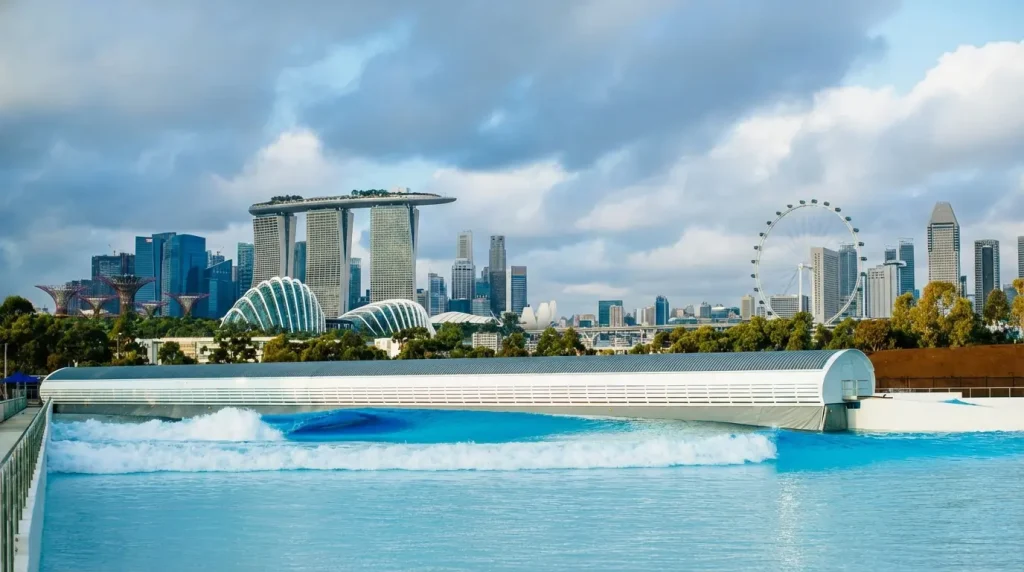
The biggest hurdle is space, and “any project like this would require government approval and a land lease,” explains Tang.
But Singapore is the master of innovative land use. If the natural waves at Long Point are inevitably lost to the proposed Long Island coastal development, what better way to honor the space than by integrating a world-class surf park into the new reclamation plans? It creates a dual-purpose blue-space that serves both coastal protection and recreational needs.
Add in the nearly 70 million passengers passing through Changi Airport annually, and you have a built-in audience of high-spending transit tourists looking for the ultimate layover experience.
As Tang perfectly summarizes: “As surfers, we naturally think it would be amazing for a country with no waves like Singapore. If executed thoughtfully, it could become a really interesting addition to Singapore’s tourism landscape.”
The tide is coming in, the technology is ready, and the math works. It’s time for Singapore to drop in.
Let’s bring the perfect wave to Singapore. If you’re interested in backing this vision, have ideas to add, want to meet like-minded investors, or just want to share your thoughts on the article, drop us a line at [email protected]

The home of live and on demand sports streaming throughout Asia.
1 Comment
Sam
6 months agoI want a wave pool in Singapore!